
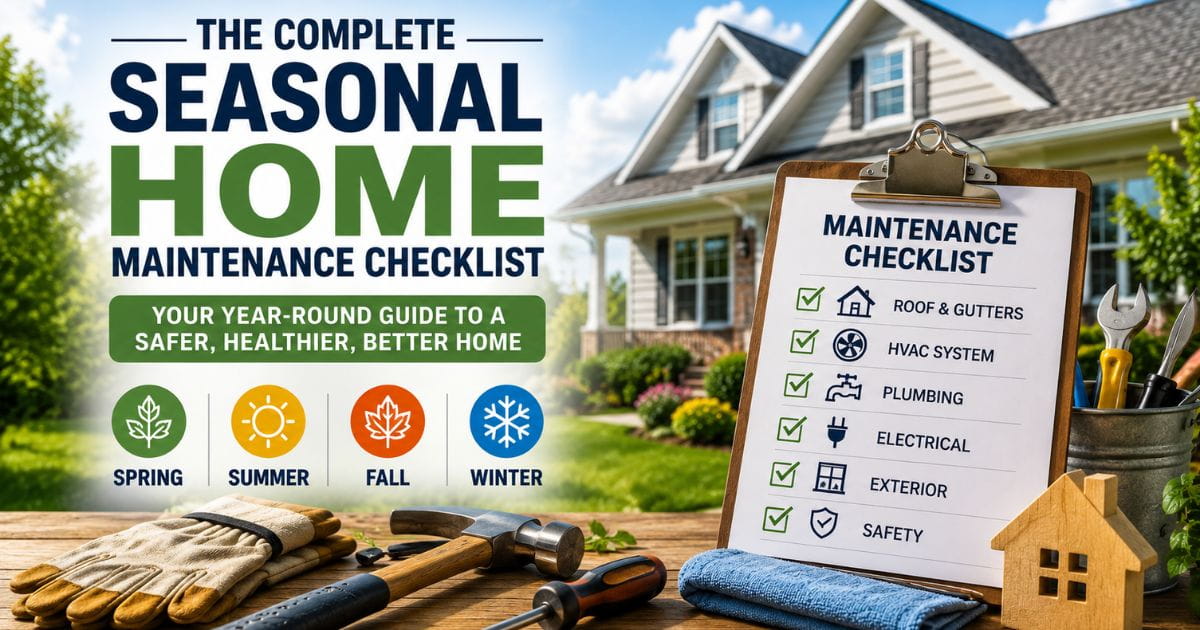
The Complete Seasonal Home Maintenance Checklist
Owning a home comes with ongoing responsibilities, and regular maintenance is one of the best ways to protect your investment. Small tasks completed throughout the year can prevent expensive repairs, improve energy efficiency, and help your home remain safe and comfortable.
This seasonal home maintenance checklist walks you through the essential tasks for spring, summer, fall, and winter. Whether you’re a first-time homeowner or have owned a house for years, following this guide can help you stay organized and avoid costly surprises.
Quick Overview
| Topic | Recommendation |
|---|---|
| 🌸 Spring Priority | Inspect the roof and gutters, service the AC, and check for winter damage. |
| ☀️ Summer Priority | Maintain the AC, clean the dryer vent, and watch for pests. |
| 🍂 Fall Priority | Service the furnace, clean gutters again, seal drafts, and drain outdoor faucets. |
| ❄️ Winter Priority | Insulate exposed pipes, watch for ice dams, and monitor the heating system. |
| 🔄 Twice-a-Year Minimum | Schedule professional HVAC servicing (air conditioner in spring and furnace in fall). |
| 📅 Monthly Tasks | Check HVAC filters and test smoke and carbon monoxide detectors. |
| 💰 Biggest Cost Saver | Cleaning gutters twice a year can help prevent expensive water damage and foundation issues. |
| 👷 When to Call a Professional | Roofing, chimney work, gas lines, and electrical panel repairs should generally be handled by qualified professionals. |
Jump to: Spring · Summer · Fall · Winter · Maintenance Calendar · Seasonal Maintenance Cost Guide
How to Use This Checklist
Don’t try to complete every task on a given season’s list in one afternoon — you’ll burn out and skip the ones that matter most. Instead, pick two or three priority items each weekend at the start of the season and work through the rest as time allows.
Keep a simple log of what you did and when — even a note on your phone works. This matters more than it sounds: if your water heater fails at year eight and you can show it was flushed annually, that record can support a warranty claim. If you sell the house, a documented maintenance history gives buyers real confidence instead of vague reassurance.
Not every task belongs to a homeowner. Roofing above a single story, gas line work, chimney flues, and anything inside your electrical panel carry real risk of injury or costly mistakes — those go to a licensed professional, every time.
Why Seasonal Home Maintenance Matters
Water is the most damaging force your home will ever face, and each season changes how it attacks. In spring, rain finds every gap a clogged gutter leaves open. In winter, that same water freezes inside pipes and expands with enough force to split copper and PVC alike. A maintenance schedule built around the seasons targets water, heat, and cold exactly when they’re doing the most damage — not on an arbitrary calendar date.
Here’s what’s actually at stake with each category of maintenance:
- Gutters and drainage: When gutters overflow, water pools against your foundation instead of draining away. Over years, this can erode soil, crack foundation walls, and create the kind of basement moisture that ruins stored belongings and invites mold.
- HVAC systems: A furnace or AC unit running with a dirty filter or low refrigerant works harder to hit the same temperature. That extra strain shows up two ways — a higher energy bill every month, and a shorter lifespan on a system that can cost $5,000–$10,000 to replace.
- Roofing: A single missing shingle doesn’t leak on its own, but it exposes the underlayment beneath it. Once water reaches that layer, it can travel sideways under the roofline before it ever shows up as a stain on your ceiling — meaning the visible damage is often much smaller than the damage already done above it.
- Plumbing: Pipes freeze from the outside in. Once ice fully blocks a pipe, pressure builds behind it with nowhere to go, and the pipe can split at its weakest point — often somewhere you can’t see until water is already coming through a wall or ceiling.
- Safety systems: Smoke and carbon monoxide detectors lose sensitivity over time, and heating season is exactly when CO risk rises. A detector that’s been silently degrading for years is often only discovered during the one moment it needed to work.
None of this requires expensive tools or advanced skill — most of it requires showing up on a schedule, before the season creates the exact conditions that turn a small issue into a large bill.
Spring Checklist
Spring maintenance is about finding what winter broke before the next rainy stretch finds it for you.
- Inspect the roof for missing, cracked, or curling shingles, and check flashing around chimneys and vents — flashing gaps are one of the most common sources of hidden leaks
- Clean gutters and downspouts, and confirm water drains at least a few feet away from the foundation rather than pooling at the base of the house
- Inspect the exterior for cracks in siding, stucco, brick, or the foundation — small cracks widen faster once winter freeze-thaw cycles have already stressed them
- Check windows and doors for winter damage; reseal caulking, since gaps here are a direct path for both water intrusion and rising energy bills
- Service the air conditioning system before the first heatwave — a unit serviced in April costs a routine visit; the same unit failing in July costs an emergency call-out rate plus days without cooling
- Test the sump pump by pouring water into the pit and confirming it activates — a pump that fails silently during a storm is how basements flood
- Inspect decks, patios, and fences for winter warping, rot, or loose fasteners before they’re bearing weight all summer
- Power-wash exterior surfaces to remove the winter grime and organic buildup that holds moisture against siding
- Check irrigation systems and outdoor faucets for freeze damage — a cracked line often doesn’t show itself until you turn the water back on
- Replace HVAC filters and set a monthly reminder — filters are cheap; the strain a dirty one puts on your system is not
- Inspect the attic and basement for moisture stains or pest activity, since these spaces show problems weeks or months before they reach living areas
- Check that landscaping still slopes away from the home — regraded soil or new mulch beds can accidentally redirect water toward your foundation
Summer Checklist
Summer maintenance is about keeping your cooling system from working harder than it has to, and staying ahead of the pests and heat damage that build up quietly.
- Change HVAC filters monthly — during peak summer use, a filter can go from clean to clogged in a few weeks, not months
- Clean the AC condenser unit, clearing leaves and trimming plants back at least two feet for airflow — a blocked condenser forces the compressor to work harder, which shortens its life
- Check attic insulation and ventilation — poor attic airflow traps heat that radiates down into living spaces, forcing your AC to fight a battle it shouldn’t have to
- Inspect exterior paint and caulking for sun damage, since UV exposure breaks down sealants faster than most homeowners expect
- Check for pest entry points — carpenter ants and termites are most active in summer heat, and small gaps around utility lines are their preferred way in
- Test smoke and carbon monoxide detectors and replace batteries
- Inspect deck or patio sealant before it takes a full season of sun and foot traffic
- Clean the dryer vent — lint buildup here is one of the most common and preventable causes of house fires
- Check grading around the home for erosion from spring rains that may have redirected drainage
- Inspect and repair window screens
- Check the garage door mechanism and safety sensors, since heat can warp tracks and affect sensor alignment
Fall Checklist
Fall maintenance is a race against the first freeze — everything left undone here becomes a winter emergency instead of a fall task.
- Clean gutters and downspouts again once leaves have fully dropped — a single fall cleaning misses the second wave of leaves that clog systems right before winter storms
- Inspect the roof and flashing while it’s still warm enough to make minor repairs before winter weather sets in
- Service the furnace or heating system — this is the single highest-priority fall task, since a furnace that fails on a January night is both a comfort problem and, if carbon monoxide is involved, a safety one
- Seal drafts around windows, doors, and exterior penetrations, since every gap is heat you’re paying to lose all winter
- Drain and shut off outdoor faucets and irrigation systems — this single step prevents the majority of frozen and burst outdoor spigots
- Inspect the chimney and flue, and schedule a professional sweep if you use a fireplace — creosote buildup is a leading cause of chimney fires
- Check weatherstripping on doors and the garage
- Test the heating system and replace filters before you’re relying on it daily
- Inspect attic and basement insulation, since gaps here are where heat escapes fastest
- Rake leaves and clear debris away from the foundation and vents — wet leaves piled against siding hold moisture against it for months
- Store or cover outdoor furniture
- Check smoke and carbon monoxide detector batteries — many fire departments recommend doing this at the same time clocks change, specifically so it doesn’t get forgotten
Winter Checklist
Winter maintenance is about limiting damage from cold you can’t control — the goal is catching stress on your systems before it becomes a failure.
- Monitor for ice dams along roof edges — these form when heat escaping from the attic melts snow, which then refreezes at the colder eaves and can force water back up under shingles
- Insulate exposed pipes, especially in garages, crawl spaces, and exterior walls, where a few degrees of extra protection is often the difference between a working faucet and a split pipe
- Keep a slow drip on faucets during extreme cold — moving water is far less likely to freeze solid than standing water
- Check attic ventilation, since poor airflow is the root cause of most ice dams, not just heavy snowfall
- Test the heating system regularly and change filters monthly during heavy winter use
- Check for drafts near windows, doors, and outlets — even small drafts force your heating system to run longer than it should
- Clear snow safely from walkways and, when necessary, roof edges, without putting yourself at risk on ice or a ladder
- Check carbon monoxide detectors, since sealed-up homes and constant furnace use both raise CO risk in winter
- Inspect garage door insulation and seals — an uninsulated garage door can pull down the temperature of an attached room significantly
- Keep gutters clear of ice buildup where it’s safe to do so
- Check emergency supplies — flashlights, batteries, and a backup heat source — before a storm makes it urgent
Seasonal Home Maintenance Toolkit
Having the right tools within reach makes it far more likely a task actually gets done instead of postponed for another season. Here’s what covers most of the checklist above:
Basic hand tools
- A ladder tall enough to safely reach gutters and roof edges — most gutter injuries happen from ladders that are too short, forcing an overreach
- Screwdriver set and adjustable wrench
- Caulking gun and exterior-grade caulk, for sealing gaps before they let water or heat through
- Utility knife and duct tape
- Flashlight or headlamp, since attic and crawl space checks rarely happen near good lighting
Seasonal-specific items
- Gutter scoop and heavy-duty gloves, so debris removal doesn’t turn into a hand injury
- A hose attachment for sump pump testing
- Pipe insulation sleeves or heat tape for exposed plumbing
- Weatherstripping tape and door sweeps
- Extra HVAC filters bought in bulk, so a missing filter never becomes the reason a change gets skipped
- Spare batteries for every smoke and carbon monoxide detector in the house
When to call a professional instead of reaching for a tool: Roof repairs above a single story, chimney sweeps, gas line work, and anything inside your electrical panel carry a level of risk that isn’t worth the money saved by doing it yourself. A service call typically costs far less than the damage — or injury — a mistake in these areas can cause.
Maintenance Calendar
| Season | Primary Goal | Priority Tasks |
|---|---|---|
| 🌸 Spring (Mar–May) | Find winter damage before spring rain causes bigger problems. | Roof inspection, clean gutters, service the air conditioner, inspect siding and foundation. |
| ☀️ Summer (Jun–Aug) | Keep cooling systems running efficiently and maintain outdoor areas. | AC maintenance, clean the dryer vent, inspect decks, trim vegetation, check for pests. |
| 🍂 Fall (Sep–Nov) | Prepare your home for freezing temperatures. | Service the furnace, clean gutters, seal drafts, drain outdoor faucets, inspect weatherstripping. |
| ❄️ Winter (Dec–Feb) | Protect your home from cold-weather damage. | Insulate exposed pipes, monitor for ice dams, test heating systems, check smoke and carbon monoxide detectors. |
Monthly tasks, year-round:
- Test smoke and carbon monoxide detectors — sensors degrade over years, often without any warning sign
- Check HVAC filters — a filter that looks fine at a glance may already be restricting airflow
- Check under sinks and around major appliances for slow leaks, which cause far more damage over months than a sudden one does in a day
Twice-yearly tasks:
- Professional HVAC servicing (spring for AC, fall for furnace)
- Deep-clean gutters (spring and fall)
- Test the sump pump and check emergency supplies
Seasonal Maintenance Cost Guide
Here’s what these tasks typically cost to do on schedule — compared with what they cost when neglect turns them into a repair. Prices vary by region, home size, and contractor, so treat these as general planning ranges rather than quotes.
| Maintenance Task | Typical DIY Cost | Typical Professional Cost | Potential Cost If Neglected |
|---|---|---|---|
| HVAC filter replacement | $10–$25 per filter | $30–$50 (if bundled with service) | $150–$500+ in reduced efficiency and blower strain |
| Gutter cleaning | $0–$30 (tools/supplies) | $100–$250 per visit | $5,000–$15,000+ in foundation or basement water damage |
| AC servicing (Spring) | Not recommended | $100–$250 per visit | $3,000–$7,000+ for compressor failure or system replacement |
| Furnace servicing (Fall) | Not recommended | $100–$300 per visit | $3,000–$6,000+ for furnace replacement |
| Roof inspection | Free (visual inspection) | $150–$400 per visit | $1,000–$10,000+ from hidden roof leaks and water damage |
| Pipe insulation | $20–$60 in materials | $150–$400 | $1,000–$5,000+ per burst pipe plus water damage |
| Dryer vent cleaning | $20–$40 (cleaning kit) | $100–$200 per visit | Increased fire risk and costly property damage |
| Chimney sweep | Not recommended | $150–$300 per visit | $1,000–$4,000+ in chimney repairs or fire damage |
| Sump pump test/replacement | Free (test) / $150–$400 (replace) | $200–$600 installed | $10,000+ in basement flooding and water damage |
Common Mistakes to Avoid
- Waiting until something breaks. By the time a furnace fails outright, it’s usually been losing efficiency for months — the fix at that point costs a replacement, not a tune-up.
- Skipping gutter cleaning. A single missed cleaning cycle is often enough for water to start pooling against the foundation, and foundation repairs are among the most expensive a home can need.
- Ignoring HVAC filter changes. A filter left in too long doesn’t just reduce airflow — it forces the blower motor to work harder, which is exactly the kind of strain that shortens a system’s life by years.
- Forgetting to winterize outdoor faucets. This one step prevents the majority of frozen and burst spigots homeowners deal with every winter.
- DIY-ing tasks that need a professional. A mistake on a roof, chimney, or electrical panel isn’t just expensive to fix — it can also void insurance coverage if it’s later found to be a factor in damage.
- Not keeping maintenance records. Without a log, a warranty claim on a failed water heater or appliance often comes down to your word against the manufacturer’s — a paper trail changes that conversation.
- Overlooking attic and basement checks. Moisture and pest problems almost always start in the spaces you don’t walk through daily, which is exactly why they go unnoticed the longest.
- Treating maintenance as a one-time event. A checklist completed once when you move in tells you nothing about what’s changed in the three years since.
How often should I service my HVAC system?
Twice a year — get the AC checked in spring and the furnace checked in fall. It sounds like overkill, but servicing before each system’s busy season catches small problems, like a weak capacitor or low refrigerant, before they turn into a breakdown on the one day you actually need the system to work.
What is the most important seasonal maintenance task?
If you only do one thing, clean your gutters. It sounds too simple to matter, but overflowing gutters send water straight to your foundation, and foundation repairs are some of the most expensive and disruptive fixes a home can need.
Can I do seasonal home maintenance myself, or do I need a professional?
Plenty of it, yes — filters, gutters, and caulking are all reasonable DIY jobs with basic tools. Roofs, chimneys, gas lines, and electrical panels are a different story. Get those done by a licensed pro; it’s not just safer, it also keeps your insurance coverage intact if something ever goes wrong.
How much does seasonal home maintenance cost per year?
It depends on your home’s size and age, but plan for a modest yearly budget covering filters, minor repairs, and seasonal HVAC servicing. That’s usually a fraction of what a single emergency repair costs, since emergencies come with after-hours rates plus the damage caused by waiting.
What should be on a fall maintenance checklist specifically?
Get the furnace serviced, clean your gutters a second time after the leaves drop, seal up drafts, drain the outdoor faucets, and have your chimney checked if you use it. Fall is your last real window to catch these before winter turns them into emergencies.
How do I know if my gutters need cleaning?
Watch for water spilling over the sides during rain, plants growing out of the gutter, sagging sections, or streaks on the siding underneath. Any one of those means it’s overdue.
What’s the single best habit for reducing home repair costs long-term?
Doing the same small tasks on the same schedule, every year, without fail. Homes that get consistent attention rarely have dramatic failures — they have gradual wear that gets caught while it’s still cheap to fix.
Final Thoughts on Seasonal Home Maintenance Checklist
Home maintenance doesn’t need to be overwhelming, and it doesn’t require special skills to get right. Breaking tasks into seasonal checklists turns a vague to-do list into a manageable one, and gives you a clear reason to revisit your home’s systems before problems have a chance to develop. A few preventative tasks completed each season — done consistently, not perfectly — tend to matter more over ten years than any single big repair ever will.
Save this guide, work through it each season, and use the links throughout to go deeper on the systems that matter most to your home right now.





2 Comments