
Summer Home Maintenance Checklist: 15 Essential Tasks Every Homeowner Should Complete
Summer doesn’t damage a home the way winter does, it wears it down instead. A dirty AC filter doesn’t fail in a day; it just makes the compressor work a little harder every single day until, three summers later, it fails for good. A dryer vent packed with lint doesn’t catch fire the first week it’s clogged; it just sits there as risk until the day everything lines up wrong. Summer maintenance is less about emergencies and more about not quietly shortening the life of everything you own.
This checklist covers the 15 tasks that matter most, in the order worth tackling them, with an explanation of what happens if each one gets skipped.
Part of our Seasonal Home Maintenance Checklist series, see the full-year guide for spring, fall, and winter checklists.
Key Takeaways
| Topic | Details |
|---|---|
| 🏠 Total tasks | 15, covering HVAC, exterior, pests, safety, and outdoor systems |
| ☀️ Best time to start | Early summer, before peak heat puts maximum strain on your AC system |
| 🔝 Highest priority | HVAC filter changes and condenser cleaning, this is what keeps your AC from overworking |
| 🔥 Why summer specifically | Heat, storms, and pests all peak at once, and neglect compounds quietly instead of failing all at once |
| 🧯 Easiest overlooked task | Dryer vent cleaning, a leading and highly preventable cause of house fires |
| 👷 Call a pro for | AC refrigerant issues, roof storm damage, and anything involving the electrical panel |
Jump to: The 15 Tasks · Summer Timeline · Common Mistakes · FAQ
Why Summer Maintenance Matters
Summer stresses your home in two ways at once: heat forces cooling systems to run longer and harder than any other time of year, and storms, pests, and UV exposure attack the exterior while you’re busy enjoying the season instead of inspecting it. None of this shows up as a single dramatic failure, it shows up as a higher energy bill in July, a slightly weaker AC by August, and a repair bill in September that traces back to something small that went unchecked in June.
The 15 Essential Summer Maintenance Tasks
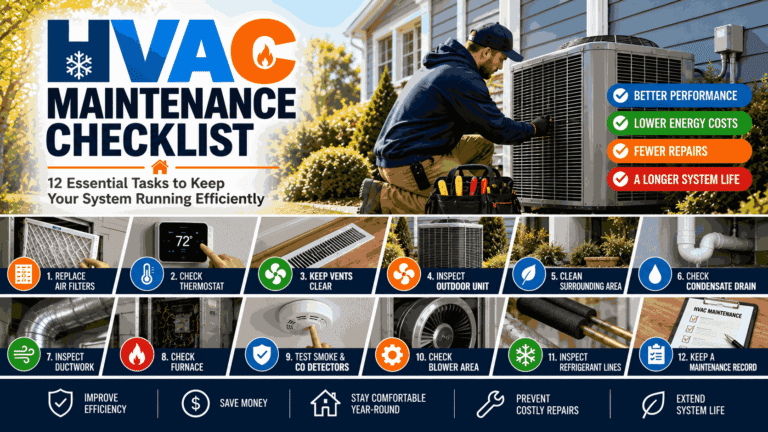
1. Change HVAC Filters Monthly
During peak summer use, a filter can go from clean to clogged in under a month, much faster than in cooler seasons. A restricted filter forces your blower motor to work harder for the same output, which shows up as both a higher energy bill and faster wear.
2. Clean the AC Condenser Unit
Clear leaves and debris from around the outdoor unit and trim back plants at least two feet for airflow. A blocked condenser forces the compressor to work harder to dump heat, and the compressor is the most expensive part of the system to replace.
3. Check Attic Insulation and Ventilation
Poor attic airflow traps heat that radiates down into living spaces, forcing your AC to fight a battle it shouldn’t have to. If upstairs rooms run noticeably hotter than the rest of the house, this is usually why.
4. Inspect Exterior Paint and Caulking for Sun Damage
UV exposure breaks down exterior caulk and paint faster than most homeowners expect. Once caulking cracks, it stops blocking moisture and outside air, which shows up first as a higher cooling bill.
5. Check for Pest Entry Points
Carpenter ants and termites are most active in summer heat, and small gaps around utility lines, foundation cracks, or damaged screens are their preferred way in. A five-minute check around the exterior now is far cheaper than termite damage discovered later.
6. Test Smoke and Carbon Monoxide Detectors
Press the test button on every unit and replace batteries as needed. Detectors lose sensitivity gradually over years, which means a failing one often gives no warning sign before the moment it’s actually needed.
7. Inspect Deck or Patio Sealant
Check for graying wood, water absorption, or peeling sealant before the deck takes a full season of sun and foot traffic. Resealing now is a weekend project; replacing rotted boards later is not.
8. Clean the Dryer Vent
Lint buildup in a dryer vent is one of the most common and most preventable causes of house fires. If a load of laundry is taking noticeably longer to dry than it used to, that’s often the first sign the vent needs attention.
9. Check Grading and Drainage After Storms
Summer storms can erode soil and redirect drainage without any obvious sign from the yard. Walk the perimeter after a heavy rain and confirm water is still moving away from the foundation, not pooling against it.
10. Inspect and Repair Window Screens
A torn screen isn’t just a cosmetic issue in summer, it’s an open door for insects every time a window is open. Small tears are a quick patch; a full screen replacement is cheap but easy to forget until it’s needed.
11. Test the Garage Door Mechanism and Safety Sensors
Heat can warp tracks and throw off sensor alignment. Test that the door reverses properly when something blocks its path, this is a genuine safety feature, not just a convenience check.
12. Check Outdoor Faucets, Hoses, and Sprinkler Heads for Leaks
Summer is peak water usage season, and a slow leak in a hose bib or sprinkler line can waste significant water, and money, for months before anyone notices the bill creeping up.
13. Inspect and Clean Exhaust Fans
Bathroom and kitchen exhaust fans work harder in summer as homes stay sealed up against the heat. A fan clogged with dust moves less air, which lets humidity build up indoors and creates the kind of damp conditions mold prefers.
14. Check the Water Heater for Sediment Buildup
Sediment collects at the bottom of a water heater tank over time, and it forces the unit to work harder to heat the same amount of water. A simple annual flush extends the tank’s working life and keeps efficiency up.
15. Walk the Roof Perimeter After Storm Season Begins
After any significant summer storm, do a visual check from the ground for missing shingles, dented vents, or debris damage. Catching storm damage within days keeps a small insurance claim small, waiting until fall often means the damage has already let water in.
Summer Maintenance Timeline
Spreading these 15 tasks across the season keeps them manageable instead of overwhelming.
| Timeframe | Focus | Tasks |
|---|---|---|
| Early Summer | Get cooling systems ready for peak heat | HVAC filter change, AC condenser cleaning, attic ventilation check |
| Mid Summer | Exterior and safety upkeep | Caulking/paint check, pest inspection, smoke/CO detector test, dryer vent cleaning |
| Late Summer | Storm recovery and efficiency | Grading check after storms, roof perimeter walk, water heater flush, exhaust fan cleaning |
Common Mistakes to Avoid
- Waiting for the AC to fail before checking it. By the time a unit stops cooling entirely, it’s often been losing efficiency for weeks, the fix at that point costs more and takes longer than routine upkeep would have.
- Ignoring a longer drying time on laundry. This is one of the clearest early signs of a clogged dryer vent, and it’s easy to dismiss as “just an old dryer.”
- Skipping pest checks because nothing is visible yet. Termite and carpenter ant damage is almost always well underway before it’s visible from the outside.
- Forgetting exhaust fans. They’re easy to overlook because they’re not visible from outside, but a clogged one contributes directly to indoor humidity and mold risk.
- Not inspecting after storms. A quick post-storm check catches roof and drainage damage while it’s still a small, cheap fix.
Frequently Asked Questions
How often should I check my AC filter in summer?
Roughly once a month, though during heavy use it’s worth checking every three to four weeks. Summer is the season filters clog fastest, since the system is running longer and more often than at any other time of year.
What’s the most overlooked summer maintenance task?
Dryer vent cleaning. It doesn’t feel urgent because nothing looks obviously wrong, but a lint-clogged vent is one of the most common and preventable causes of house fires.
Do I need a professional to clean my AC condenser unit?
No, clearing debris and trimming nearby plants is a simple DIY task. If you notice reduced cooling performance even after cleaning it, that’s when it’s worth calling a professional to check refrigerant levels.
How do I know if I have a pest problem before it’s serious?
Look for small piles of sawdust-like material near wood framing, discarded wings near windows, or hollow-sounding wood when tapped. Catching these early signs means a much smaller treatment than waiting until structural damage appears.
What should I check after a summer storm?
Walk the roofline from the ground for missing shingles or debris damage, and check that drainage around the foundation hasn’t been disrupted. Both are quick checks that catch expensive problems while they’re still small.
Final Thoughts
Summer maintenance is quieter than the other seasons, nothing forces your hand the way a frozen pipe or a failed furnace does. That’s exactly what makes it easy to skip, and exactly why skipping it costs more later. Work through these 15 tasks over a few summer weekends, prioritize your HVAC system and dryer vent first, and you’ll head into fall with systems that have been maintained instead of merely survived.