
Spring Home Maintenance Checklist: 15 Essential Tasks Every Homeowner Should Complete
Winter doesn’t announce the damage it causes. A shingle loosened by January ice, a hairline foundation crack widened by freeze-thaw cycles, a gutter bracket weakened under snow load, none of it shows up until spring rain arrives and finds every weak point at once. That’s what makes spring the most important maintenance season of the year: it’s the one chance to find and fix winter’s damage before it compounds.
This checklist covers the 15 tasks that matter most, in the order worth tackling them, with an explanation of what happens if each one gets skipped.
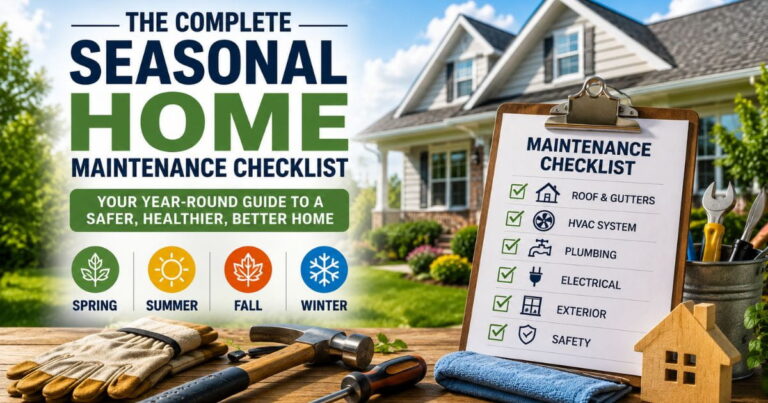
Part of our Seasonal Home Maintenance Checklist series, see the full-year guide for summer, fall, and winter checklists.
Key Takeaways
| Topic | Details |
|---|---|
| 🏠 Total tasks | 15, covering roof, gutters, exterior, HVAC, plumbing, and safety systems |
| 🌧️ Best time to start | Right after the last hard freeze, ideally following a rainy stretch so drainage problems are visible |
| 🔝 Highest priority | Roof and gutter inspection, this is where winter damage shows up first |
| ❄️→☀️ Why spring specifically | It’s the only season where you can see winter’s damage and still fix it before summer heat or another freeze makes it worse |
| 🔧 Book early | AC servicing, schedule before the first heatwave, when technicians are still easy to book |
| 👷 Call a pro for | Roof repairs, foundation cracks wider than a quarter-inch, and anything involving the electrical panel |
Jump to: The 15 Tasks · Spring Timeline · Common Mistakes
Why Spring Maintenance Matters
Every other season either causes damage or hides it. Spring is when you can actually see what happened. Snow load has tested your roof and gutters all winter, freeze-thaw cycles have pushed on every crack in your foundation and driveway, and moisture has had months to work into places you can’t normally see. Spring is also the last calm window before two demanding seasons back to back, summer heat and, eventually, next winter’s cold, so anything left broken now gets tested hard before you get another easy chance to fix it.
The 15 Essential Spring Maintenance Tasks
1. Inspect the Roof for Winter Damage
Walk the perimeter of your home and look up, or use binoculars, to check for missing, cracked, or curling shingles, and pay close attention to flashing around chimneys and vents. Flashing gaps are one of the most common sources of leaks that don’t show up inside the house until they’ve been active for months.
2. Clean Gutters and Downspouts
Clear out leaves, seeds, and winter debris, then run a hose through the system to confirm water exits at least a few feet from the foundation. A gutter that looks clean from the ground can still be clogged at a low point you can’t see.
3. Check Exterior Siding, Stucco, and Foundation for Cracks
Look closely at foundation walls, siding seams, and stucco for cracks that widened over winter. Freeze-thaw cycles push moisture into small cracks and expand them as it freezes, so a hairline crack in November can be a real gap by March.
4. Reseal Caulking Around Windows and Doors
Run a finger along the caulk lines on exterior windows and doors. If it’s cracked, pulling away, or feels brittle, reseal it. Gaps here let in both water and outside air, which shows up as a higher energy bill before it shows up as visible damage.
5. Service the Air Conditioning System
Get the AC checked and the coils cleaned before the first real heatwave. A unit serviced in April is a routine appointment; the same unit failing in July is an emergency call-out plus days spent without cooling.
6. Test the Sump Pump
Pour a bucket of water into the sump pit and confirm the pump activates and drains it. A sump pump that fails silently is exactly how basements flood during the first heavy spring storm.
7. Inspect Decks, Patios, and Fences
Check for warping, rot, or loosened fasteners caused by winter moisture and freeze cycles. These structures are about to carry a full season of weight and foot traffic, so it’s worth catching a soft board now rather than after someone steps through it.
8. Power-Wash Exterior Surfaces
Clear winter grime, algae, and organic buildup from siding, walkways, and driveways. This buildup holds moisture against surfaces long after rain has stopped, which is exactly the kind of slow, constant dampness that leads to rot and mold.
9. Check Irrigation Systems and Outdoor Faucets
Turn irrigation systems back on gradually and check outdoor faucets for freeze damage. A cracked line often stays invisible until the water pressure is turned back on, so do this check before you’re relying on the system daily.
10. Replace HVAC Filters
Swap in a fresh filter and set a recurring monthly reminder. It’s a five-dollar part, but a clogged one forces your blower motor to work harder, which is exactly the kind of strain that shortens a system’s working life.
11. Inspect the Attic and Basement for Moisture or Pests
Look for water stains, musty smells, or signs of pest activity in both spaces. These areas show problems weeks or months before they reach living spaces, which makes them the earliest warning system your home has.
12. Check Yard Drainage and Grading
Confirm the ground still slopes away from your foundation. Winter frost heave, new mulch beds, or settled soil can quietly redirect water toward the house instead of away from it.
13. Test Smoke and Carbon Monoxide Detectors
Press the test button on every unit and replace any battery that’s due. Many fire departments recommend doing this at the spring clock change specifically because it’s an easy task to forget otherwise.
14. Inspect Windows and Screens
Check for torn screens, foggy double-pane glass, or windows that no longer seal tightly. A torn screen is a minor fix now; it’s an open invitation for pests once summer arrives.
15. Fertilize and Prep the Lawn
Apply a spring fertilizer treatment and reseed any bare patches. A healthy, established lawn also does quiet structural work, it helps absorb rainfall instead of letting it run straight toward your foundation.
Spring Maintenance Timeline
Spreading these 15 tasks across the season makes them manageable instead of overwhelming.
| Timeframe | Focus | Tasks |
|---|---|---|
| Early Spring | Assess winter damage | Roof inspection, gutter cleaning, exterior crack check, attic/basement check |
| Mid Spring | Systems and safety | AC servicing, sump pump test, smoke/CO detector test, HVAC filter change |
| Late Spring | Outdoor and finishing touches | Deck/patio/fence check, power-washing, irrigation check, windows/screens, lawn prep |
Common Mistakes to Avoid
- Skipping the roof check because nothing looks wrong from the ground. Most early roof damage is only visible up close or from directly above, by the time it’s visible from the yard, it’s often already leaking.
- Cleaning gutters before a rainstorm instead of after one. You lose the chance to actually see how water behaves, which is the whole point of the inspection.
- Servicing the AC too late. Waiting until the first hot week means competing with every other homeowner for a technician’s time, and paying more for the privilege.
- Ignoring hairline foundation cracks. A crack that looks cosmetic in spring can widen significantly by the following winter if water keeps getting into it and freezing.
- Treating this as a one-weekend project. Fifteen tasks completed properly over a few weekends beats fifteen tasks rushed and half-checked in a single Saturday.
When should I start my spring home maintenance checklist?
As soon as the hard freezes are done for the season, ideally after you’ve had at least one good rainstorm. That combination lets you see both frost damage and drainage problems at the same time, instead of catching them separately later.
What’s the most important spring maintenance task?
The roof and gutter inspection, without much competition. Winter does most of its damage to these two systems, and catching problems here early prevents the water damage that tends to be the most expensive to fix.
How long does a full spring maintenance checklist take?
Most homeowners can get through all 15 tasks in two to three weekends, especially if a couple of items, like AC servicing or a mold concern, get handed off to a professional instead of tackled solo.
Do I really need to service my AC every spring, even if it worked fine last year?
Yes. A unit that “worked fine” can still be running on low refrigerant or a struggling capacitor, problems that don’t cause total failure right away, but do cause higher bills and a shorter system lifespan in the meantime.
What spring maintenance tasks are safe to skip if I’m short on time?
Power-washing and lawn fertilizing are the most postponable, they matter for appearance and long-term yard health but won’t cause structural damage if delayed a few weeks. Roof, gutter, and foundation checks should never be the ones you skip.
Final Thoughts
Spring maintenance isn’t really about the fifteen tasks themselves, it’s about using the one season where winter’s damage is visible and summer’s stress hasn’t started yet. Work through this list in a few manageable weekends, prioritize the roof and gutters first, and you’ll head into summer with a home that’s actually ready for it instead of one quietly carrying problems from months ago.