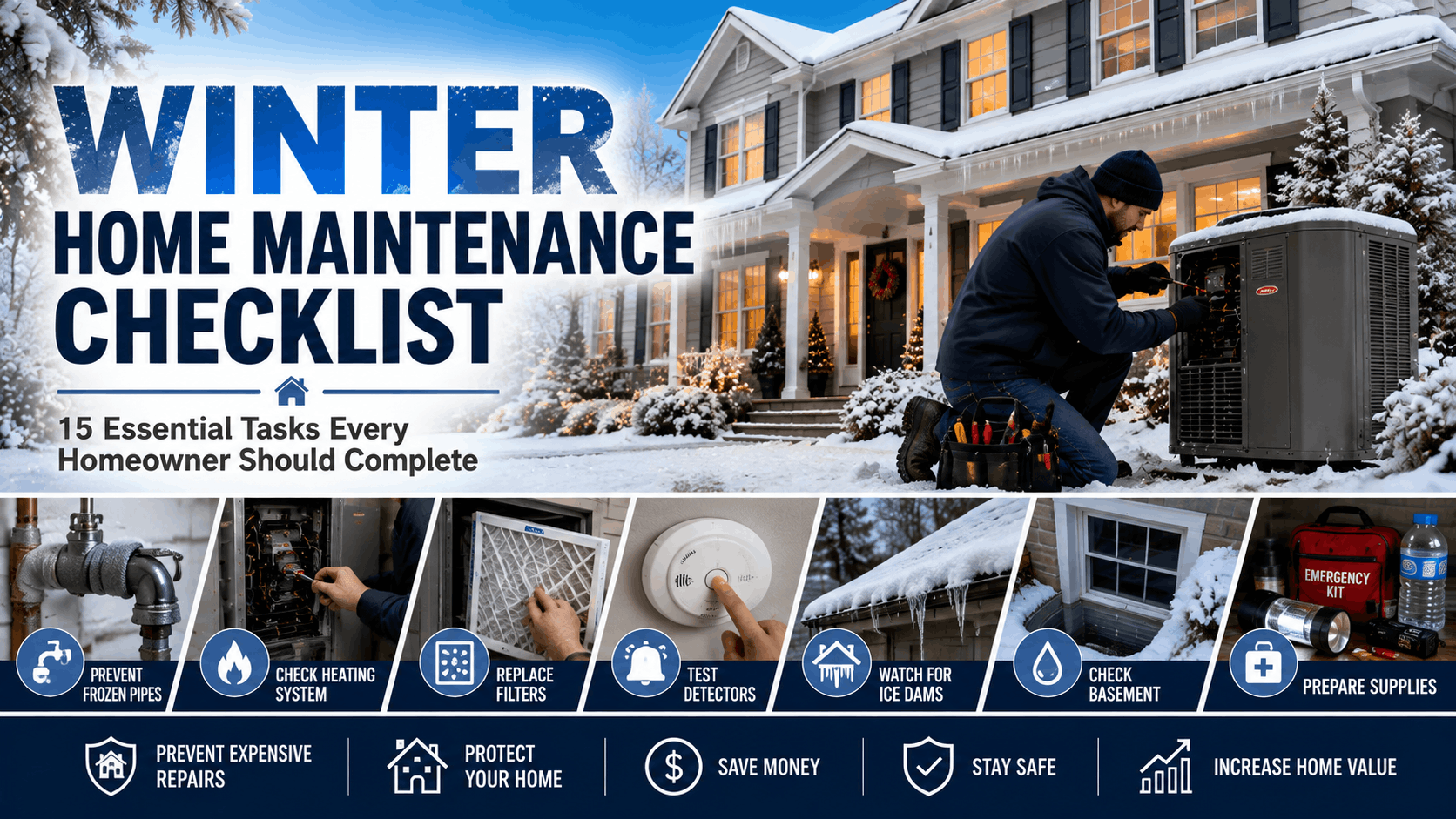
Winter Home Maintenance Checklist (2027): 15 Essential Tasks Every Homeowner Should Complete
Winter doesn’t give second chances the way other seasons do. There’s no next weekend to catch up on a task you skipped; cold weather either finds a weakness in your home immediately or it doesn’t. A pipe that isn’t insulated can split in a single hard freeze. A furnace that hasn’t been maintained can fail on the coldest night of the year, not a convenient one. This is the season where maintenance stops being about prevention over time and starts being about whether your home can survive the next cold snap.
This checklist covers the 15 tasks that matter most once winter has arrived, in the order worth tackling them, with an explanation of what happens if each one gets skipped.
Part of our Seasonal Home Maintenance Checklist series, see the full-year guide for spring, summer, and fall checklists.
Key Takeaways
| Topic | Details |
|---|---|
| 🏠 Total tasks | 15, covering plumbing, heating, roofing, and safety systems |
| ❄️ Best time to start | Before the first hard freeze of the season — several tasks lose all value once cold weather has already arrived |
| 🔝 Highest priority | Insulating exposed pipes, a burst pipe can release hundreds of gallons before anyone notices |
| 🔥 Second priority | Keeping the heating system running reliably, since a failure in extreme cold is both a comfort and a safety issue |
| 🌡️ Why winter specifically | Damage happens immediately rather than building up over time, so there’s little room for delay |
| 👷 Call a pro for | Furnace repairs, roof snow/ice removal, and anything involving the electrical panel |
Jump to: The 15 Tasks · Winter Timeline · Common Mistakes · FAQ
Why Winter Maintenance Matters
Every other season gives you time. A cracked foundation in spring can wait a few weeks for repair. A dirty AC filter in summer costs you efficiency, not a flood. Winter doesn’t work that way — a single hard freeze is enough to split an uninsulated pipe, and a single furnace failure on a sub-zero night can mean frozen pipes throughout the whole house by morning. Winter maintenance isn’t about preventing gradual wear; it’s about making sure nothing in your home is one cold night away from a genuine emergency.
The 15 Essential Winter Maintenance Tasks
1. Monitor for Ice Dams
Watch roof edges for ridges of ice building up along the eaves. Ice dams form when attic heat melts snow on the roof, which then refreezes at the colder edges and can force water back up under shingles into the house.
2. Insulate Exposed Pipes
Wrap pipes in unheated spaces, garages, crawl spaces, and exterior walls with insulation sleeves or heat tape. A few degrees of extra protection is often the entire difference between a working faucet and a split pipe.
3. Keep a Slow Drip on Faucets During Extreme Cold
Moving water is far less likely to freeze solid than standing water. On the coldest nights, a slow drip from faucets connected to exposed piping is a simple, low-cost way to keep water moving through the line.
4. Check Attic Ventilation
Poor attic airflow is the root cause of most ice dams — not just heavy snowfall on its own. If your roof develops ice dams every year despite clear weather, ventilation is usually the underlying issue.
5. Test the Heating System Regularly and Change Filters
Don’t wait for a cold snap to find out your furnace isn’t working properly. Run it periodically through the season and swap filters monthly during heavy use, since a struggling system is far easier to diagnose on a mild day than during an emergency.
6. Check for Drafts Near Windows, Doors, and Outlets
Even small drafts force your heating system to run longer than it should to maintain the same temperature. A draft that seems minor in October becomes a noticeable line item on your heating bill by January.
7. Clear Snow Safely From Walkways and Roof Edges
Clear walkways promptly to prevent ice from forming underneath fresh snow. For roof snow, only clear what’s safely reachable from the ground with a roof rake, anything requiring you to get on the roof itself is a job for a professional.
8. Test Carbon Monoxide Detectors
Press the test button on every unit and confirm batteries are fresh. Heating systems run constantly through winter, and homes stay sealed up against the cold, both factors that raise carbon monoxide risk during exactly this season.
9. Inspect Garage Door Insulation and Seals
An uninsulated or poorly sealed garage door can pull down the temperature of an attached room significantly, especially if there’s living space or plumbing above or beside the garage. Weatherstripping here is a low-cost fix with a real impact.
10. Keep Gutters Clear of Ice Buildup
Where it’s safe to do so, clear ice buildup from gutters to prevent it from contributing to ice dams. If ice has already formed solidly, this is often better left to a professional than approached with a ladder on icy ground.
11. Check Emergency Supplies and Backup Heat
Confirm flashlights work, batteries are stocked, and any backup heat source is ready before a storm makes it urgent. Winter storms are one of the more common causes of multi-day power outages, and preparation matters more when temperatures are dangerously low.
12. Flush Sediment From the Water Heater
Sediment buildup forces a water heater to work harder to heat the same volume of water, and winter is when hot water demand is highest. A simple annual flush keeps the unit running efficiently through its busiest season.
13. Check the Basement and Crawl Space for Cold Drafts or Moisture
These spaces often develop condensation or drafts that go unnoticed for months, since they’re not walked through daily. Catching moisture here early prevents mold problems that are far more expensive to fix once they’ve spread.
14. Trim Tree Branches Near the House Before Ice Storms
Branches weighed down with ice or heavy snow are a common cause of roof and window damage. Trimming branches that hang over the roofline before a storm is far cheaper than repairing what falls during one.
15. Check Exterior Faucets and Hose Bibs One Last Time
Even if these were drained in fall, a quick winter check confirms nothing has been left connected or reopened. A garden hose accidentally left attached to an outdoor spigot can trap water in the line and cause it to freeze and crack.
Winter Maintenance Timeline
Spreading these 15 tasks across the season keeps your home protected through the coldest stretches, not just at the start.
| Timeframe | Focus | Tasks |
|---|---|---|
| Early Winter | Lock down plumbing and heating | Pipe insulation, heating system test, water heater flush, faucet check |
| Mid Winter | Monitor and maintain through the cold | Ice dam watch, attic ventilation, draft checks, CO detector test |
| Late Winter | Storm readiness and safety | Emergency supply check, snow/ice removal plan, tree branch trim, gutter ice monitoring |
Common Mistakes to Avoid
- Waiting until a cold snap to check the furnace. By then, a technician is harder to book, and the problem is already affecting your home, not just waiting to be found.
- Climbing onto a snowy or icy roof. This is one of the more dangerous DIY mistakes homeowners make in winter, a roof rake from the ground handles most situations without the fall risk.
- Running a generator in a garage during an outage. Carbon monoxide from fuel-burning equipment builds up fast in enclosed spaces, and this mistake is fatal far more often than people expect.
- Assuming fall pipe draining means winter plumbing is fully protected. Exposed interior pipes in unheated spaces still need insulation and, on the coldest nights, a slow drip.
- Ignoring ice dams because “it’s just how the roof looks in winter.” Ice dams aren’t cosmetic; they’re actively pushing water back up under your shingles every time they form.
Final Thoughts
Winter maintenance is less forgiving than any other season, which is exactly why it rewards preparation the most. Every task on this list exists to close a gap before cold weather finds it, insulate the pipe before the freeze, service the furnace before the cold snap, and trim the branch before the ice storm. Work through this list before winter fully sets in; prioritize plumbing and heating first, and you’ll spend the season managing comfort instead of managing emergencies.
Frequently Asked Questions
What’s the single most important winter maintenance task?
Insulating exposed pipes. A burst pipe from a single hard freeze can cause more sudden damage than almost any other winter failure, and it’s one of the cheapest problems to prevent.
How do I know if my home is at risk for ice dams?
If you notice thick ice ridges along your roof edges after snowfall, or icicles forming heavily in the same spots each year, your attic likely has ventilation or insulation gaps that are worth addressing before the next snow.
Is it safe to remove snow from my roof myself?
Only what you can reach safely from the ground with a roof rake. Climbing onto a snow- or ice-covered roof carries real fall risk, and heavier snow removal is worth hiring a professional for.
What should I do if my furnace fails during extreme cold?
Contact a heating professional immediately, and in the meantime, protect your plumbing by letting faucets drip and opening cabinet doors under sinks on exterior walls. This buys time and reduces the chance of frozen pipes while you wait for repairs.
Can I use a space heater or generator to stay warm during a power outage?
A space heater is fine when used according to its instructions and never left unattended. A generator should only ever run outdoors, well away from windows and doors, never in a garage, basement, or any enclosed space, due to carbon monoxide risk.