HVAC Maintenance Checklist: 12 Essential Tasks to Extend Your System’s Lifespan
An HVAC system rarely fails all at once. It loses a little efficiency when the filter clogs, works a little harder when the coils get dirty, and strains a little more every month a small issue goes unaddressed, until one day the compressor gives out and you’re facing a repair bill in the thousands instead of a maintenance bill in the tens or hundreds. Most HVAC replacements aren’t sudden; they’re the final step in a chain of small things nobody got around to fixing.
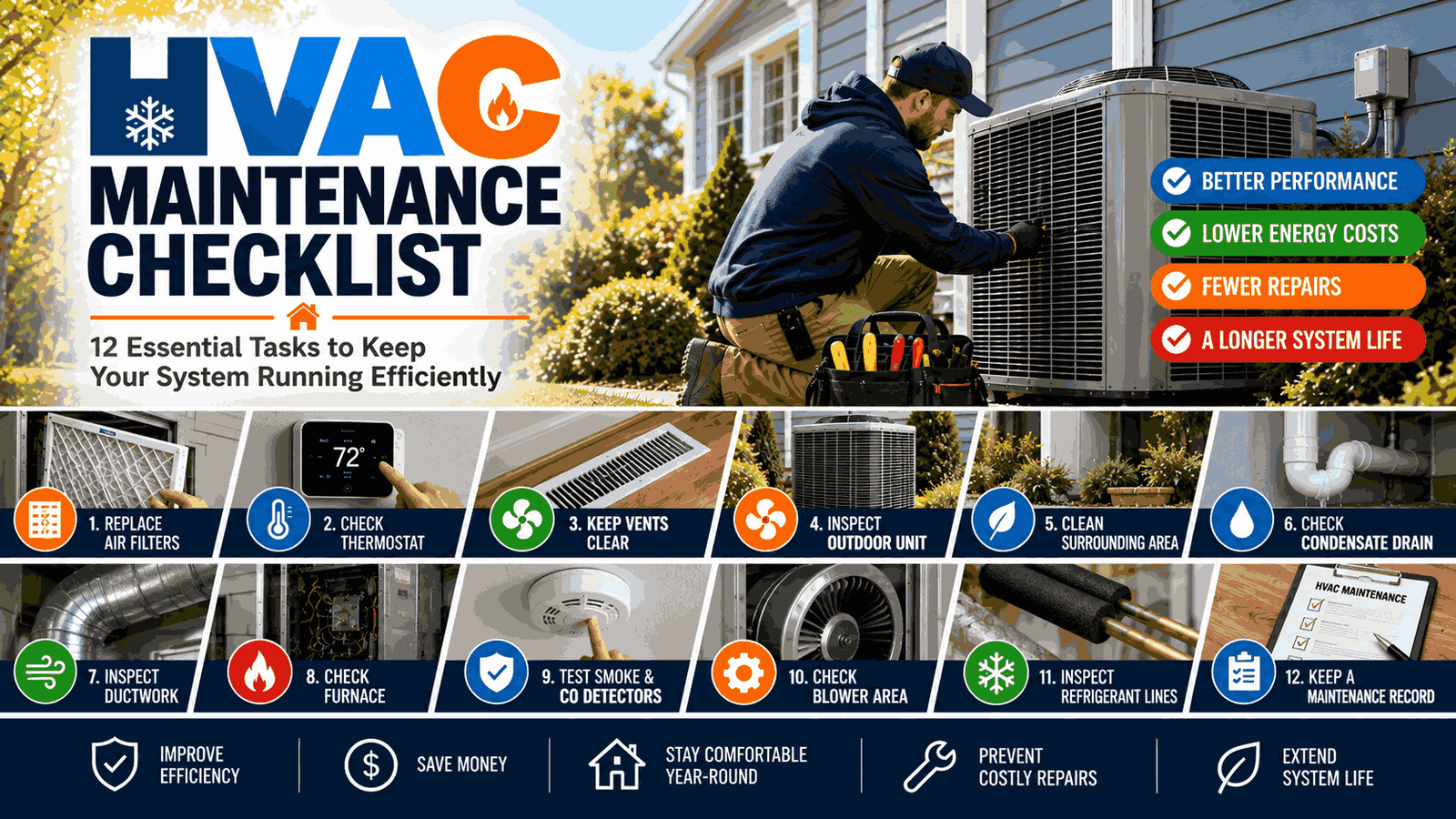
This checklist covers the 12 tasks that matter most for keeping your system efficient and extending its working life, how often to do each one, and what happens if it gets skipped.
Part of our Seasonal Home Maintenance Checklist series.
Key Takeaways
| Topic | Details |
|---|---|
| 🌬️ Total tasks | 12, covering filters, professional servicing, ductwork, and electrical safety |
| 🔧 Most frequent task | Filter changes, monthly during heavy use, every 60–90 days otherwise |
| 📅 Minimum professional visits | Twice a year: AC in spring, furnace/heat pump in fall |
| 💰 Biggest lifespan factor | Keeping the outdoor condenser clear and the filter clean, both directly reduce strain on the compressor |
| 🚨 Safety-critical task | Carbon monoxide detector checks near gas furnaces |
| 👷 Call a pro for | Refrigerant levels, duct sealing, and any electrical or gas component work |
Jump to: The 12 Tasks · Maintenance Schedule · Cost Guide · Common Mistakes · FAQ
Why HVAC Maintenance Matters
Your HVAC system is one of the most expensive components of your home, and it’s also one of the easiest to neglect, since it mostly works quietly in the background until it doesn’t. Every task on this list exists to reduce strain on the two most expensive parts of the system, the compressor and the blower motor because both are built to last many years under normal load, but wear out far faster under constant, avoidable strain.
The 12 Essential HVAC Maintenance Tasks
1. Change or Clean Filters Regularly
Replace filters every 60–90 days, or monthly during heavy summer or winter use. A clogged filter restricts airflow, which forces the blower motor to work harder and can even cause the system to overheat and shut down.
2. Schedule Professional Tune-Ups Twice a Year
Book a technician in spring for the AC and in fall for the furnace or heat pump. These visits catch problems like a weak capacitor or low refrigerant before they cause a full breakdown during the season you need the system most.
3. Clean the Outdoor Condenser Unit
Clear leaves, grass clippings, and debris from around the unit, and trim back plants at least two feet for airflow. A blocked condenser forces the compressor to work harder to release heat, and the compressor is the single most expensive part of the system to replace.
4. Clear Debris From Indoor Vents and Returns
Make sure furniture, rugs, and curtains aren’t blocking vents or return air grilles. Blocked airflow anywhere in the system forces it to work harder to reach the same temperature, which shows up as both higher bills and added wear.
5. Use a Programmable or Smart Thermostat Correctly
Set a consistent schedule that avoids extreme temperature swings, since forcing the system to make up a big temperature difference all at once causes more strain than maintaining a steady, moderate range.
6. Inspect and Clean the Condensate Drain Line
Check that the condensate line isn’t clogged with algae or debris. A blocked line can cause water to back up into the system or leak into your home, and it’s a common cause of AC systems shutting down unexpectedly in humid weather.
7. Have Refrigerant Levels Checked Professionally
Low refrigerant doesn’t just reduce cooling performance, it can cause the compressor to run hotter than it’s designed for, shortening its lifespan. This isn’t a DIY task; a technician needs to check for both level and leaks during routine servicing.
8. Inspect Ductwork for Leaks
Leaky ducts can waste a significant portion of the conditioned air your system produces before it ever reaches a room. If certain rooms never seem to reach the right temperature, duct leaks are a common and often overlooked cause.
9. Keep the Blower Motor and Moving Parts Lubricated
Older systems with motors that require lubrication should have this checked during professional servicing. A dry, straining motor draws more power and wears out faster than one that’s properly maintained.
10. Test Carbon Monoxide Detectors Near Gas Furnaces
If your heating system burns gas, working carbon monoxide detectors near it aren’t optional. A malfunctioning gas furnace can produce dangerous levels of carbon monoxide with no smell or visible warning sign.
11. Check the Circuit Breaker and Electrical Connections
If your system has tripped a breaker more than once, don’t just keep resetting it — repeated trips usually point to an underlying electrical issue that needs a professional diagnosis before it causes more serious damage.
12. Keep the Area Around Indoor and Outdoor Units Clear
Don’t store boxes, furniture, or equipment near indoor air handlers, and keep at least two feet of clearance around the outdoor unit at all times. Restricted airflow around either component forces the whole system to work harder than it should.
HVAC Maintenance Schedule
Instead of a seasonal breakdown, HVAC tasks are best organized by how often they need attention.
| Frequency | Tasks |
|---|---|
| Monthly (heavy use) / Every 60–90 days | Filter changes, visual check of indoor vents and outdoor unit clearance |
| Twice a year | Professional tune-up (AC in spring, furnace in fall), condensate line check |
| Annually | Refrigerant level check, ductwork inspection, blower motor lubrication check |
| Ongoing / as needed | Thermostat schedule review, CO detector testing, breaker monitoring |
HVAC Maintenance Cost Guide
Regular maintenance generally costs much less than major HVAC repairs or premature equipment replacement.
The figures below are rough planning ranges, not guaranteed prices. Local labor rates, equipment type, accessibility, and the exact service required can significantly change the final cost.
| Task | Typical DIY Cost | Typical Professional Cost | Cost If Neglected |
|---|---|---|---|
| HVAC filter replacement | $10–$25 per filter | $30–$50 if bundled with a visit | $150–$500+ in reduced efficiency and added system strain |
| Thermostat inspection | $0 | $75–$150 if diagnosed during a service visit | $100–$500+ for related troubleshooting or replacement |
| Outdoor AC inspection/cleaning | $0–$30 | $100–$250 | $500–$2,000+ for problems caused by neglected airflow or equipment issues |
| Condensate drain inspection | $0–$15 | $100–$250 | $500–$2,000+ for water damage or related HVAC repairs |
| Ductwork inspection | $0 | $100–$300+ | $200–$2,000+ depending on the problem and repair |
| Furnace service | Not recommended DIY | $100–$300 | $3,000–$6,000+ for major replacement |
| AC service | Not recommended DIY | $100–$250 | $3,000–$7,000+ for major repair or replacement |
| Refrigerant diagnosis | Not recommended DIY | $150–$500+ depending on repair | $1,000–$4,000+ for significant system repairs |
| Blower inspection/service | Basic visual check | $100–$400+ | $500–$2,000+ depending on component failure |
| Smoke/CO detector testing | $0–$30 | Usually included with other service | Potentially severe safety consequences |
Common Mistakes to Avoid
- Forgetting filters between seasons. Filters clog faster than most people expect, especially during peak summer and winter use checking monthly is safer than assuming quarterly is enough.
- Skipping the spring or fall tune-up because “it’s working fine.” Many HVAC problems, like low refrigerant or a weakening capacitor, don’t cause noticeable symptoms until they cause a full breakdown.
- Letting landscaping grow in around the outdoor unit. It’s an easy thing to overlook, but restricted airflow here is one of the more common causes of a compressor working harder than it should.
- Resetting a tripped breaker repeatedly without investigating why. Repeated trips are a warning sign, not a nuisance to work around.
- Treating thermostat setbacks as free savings with no downside. Large temperature swings save some energy but can add real strain to the system trying to catch back up.
Frequently Asked Questions
How often should I really change my HVAC filter?
Every 60–90 days in general, but monthly during periods of heavy summer or winter use. A filter that looks fine at a glance can already be restricting airflow more than it appears.
Is it worth getting a professional tune-up if my system seems to be working fine?
Yes. Several common HVAC problems, like low refrigerant or a weakening capacitor, don’t cause obvious symptoms until they cause a full system failure, a tune-up catches these while they’re still a small fix.
What’s the most common cause of a shortened HVAC lifespan?
Restricted airflow, whether from a dirty filter, a blocked outdoor unit, or leaky ductwork. All three force the compressor and blower motor to work harder than they’re designed to, which wears them out faster.
Can I check my own refrigerant levels?
No, this requires specialized equipment and training, and improperly handling refrigerant can be both unsafe and illegal without certification. Leave this task to a licensed HVAC technician.
How do I know if my ductwork has a leak?
Rooms that never quite reach the temperature you’ve set, a noticeable rise in energy bills without a change in habits, or visible gaps at duct joints in an attic or basement are all signs worth having checked.